Sensing / 02
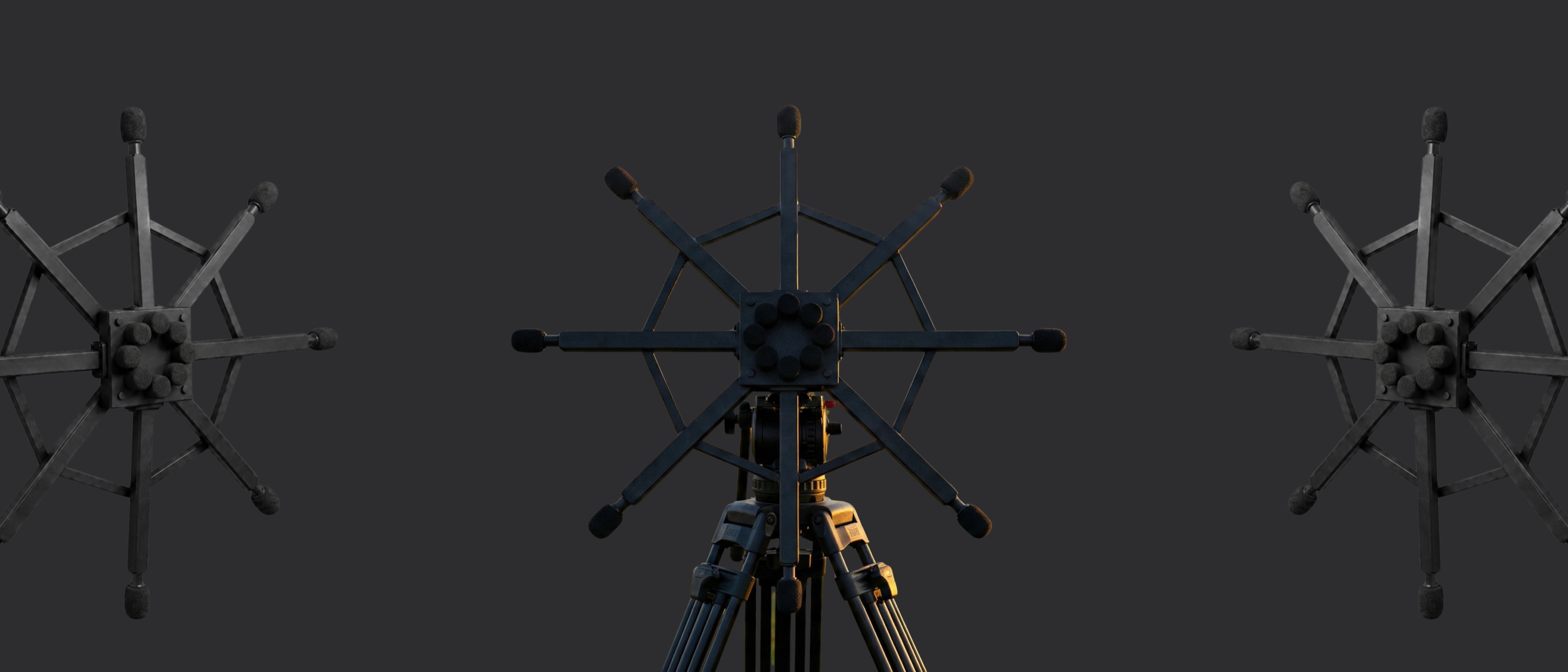
Oscura‑120
Direction finding, sensing, and tracking for fixed sites
Specifications
Detect
Directional acoustic coverage for fixed‑site defense.
Sensor
High‑sensitivity, EMI‑resistant microphone array.
Track
Tracking and multi‑target acquisition. No operator once deployed.
Output
What every detection reports.
- UAS type
- Azimuth
- Elevation
- Range
- Confidence
Integrate
C2 and CUAS stack integration with existing tech and defeat systems.
Edge
On‑device compute and ML. Adaptive performance at the edge.
Product Brief
Download the product brief.
Request Datasheet
Request the technical datasheet.
Frequently Asked Questions
Oscura‑120Oscura is built specifically for real-world environments, including urban areas with traffic, aircraft, and industrial background noise.
To increase accuracy, the system takes advantage of:
- A high-sensitivity, EMI-resistant microphone array
- Advanced signal processing chain + AI-based classification
- A proprietary acoustic signature library
Because drone acoustics have distinct spectral and temporal signatures, Oscura differentiates drones from ambient noise such as vehicles, wind, and construction activity. Each detection is accompanied by a confidence score, enabling operators or automated systems to make informed decisions.
Detection, classification, and localization occur automatically within seconds of acoustic acquisition. Using its microphone array, the system continuously tracks targets and updates positional data, enabling immediate handoff to command-and-control (C2) or downstream defeat systems if required.
No. Oscura is designed to operate autonomously in environments it has not previously encountered.
The system includes:
- AI-based classification with automated calibration
- Adaptive signal processing
- Open architecture integration with existing C2 systems
Because detection is based on acoustic physics and signature recognition rather than static environmental templates, Oscura adapts dynamically to new deployment environments without site-specific retraining.
Yes.
In addition to functioning as part of a networked deployment, a single Oscura unit can also be fully self-sufficient and:
- Detect, classify, and localize drones autonomously
- Output UAS type, azimuth, elevation, range, and detection confidence
- Integrate into existing C2 platforms (TAK, SAPIENT, or custom systems)
No.
Once deployed, Oscura operates autonomously. It performs detection, classification, and tracking onboard without requiring continuous operator input. Alerts and positional data are transmitted through secure networking channels (LoRa, WiFi, cellular, or wired).